
In today’s competitive online landscape, understanding your keywords is no longer just about search volume. To drive meaningful SEO results, marketers and website owners need in-depth keyword metrics to measure performance, assess competitiveness, and optimize content strategy. For businesses looking to improve rankings and traffic, mastering these metrics is crucial for both on-page SEO optimization and long-term growth.
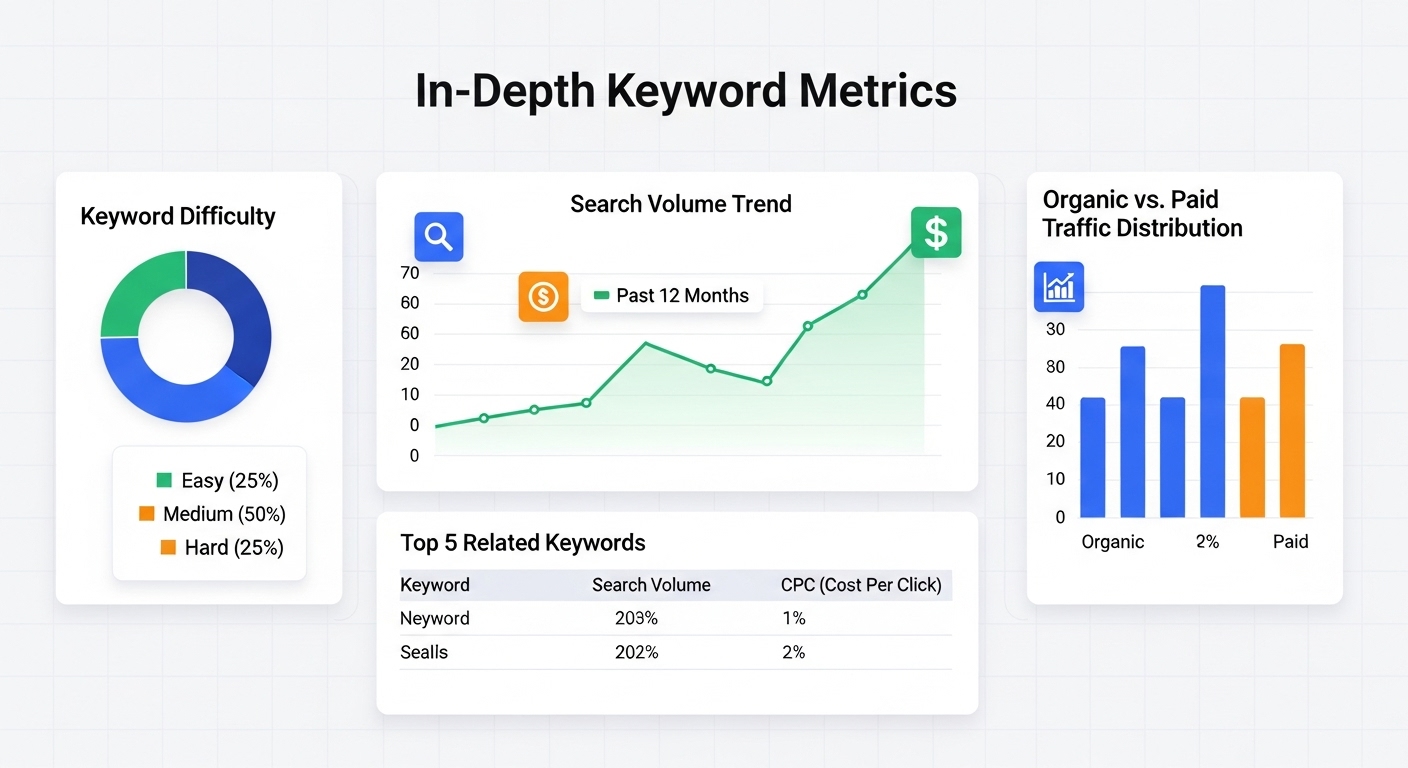
In-depth keyword metrics analyze every aspect of a keyword, including search volume, competition, keyword difficulty, cost-per-click (CPC), click-through rate potential, and search intent. This allows SEO professionals to make data-driven decisions, prioritize high-value opportunities, and maximize ROI for their content and digital marketing services.
What Are In-Depth Keyword Metrics?
In-depth keyword metrics go beyond surface-level data. They provide a comprehensive view of a keyword’s potential and performance. Instead of just looking at monthly searches, these metrics help answer:
-
How competitive is this keyword?
-
What is the user intent behind the search?
-
What is the potential traffic and conversion for this keyword?
-
Is this keyword viable for paid campaigns or organic SEO?
Essential Metrics to Track
-
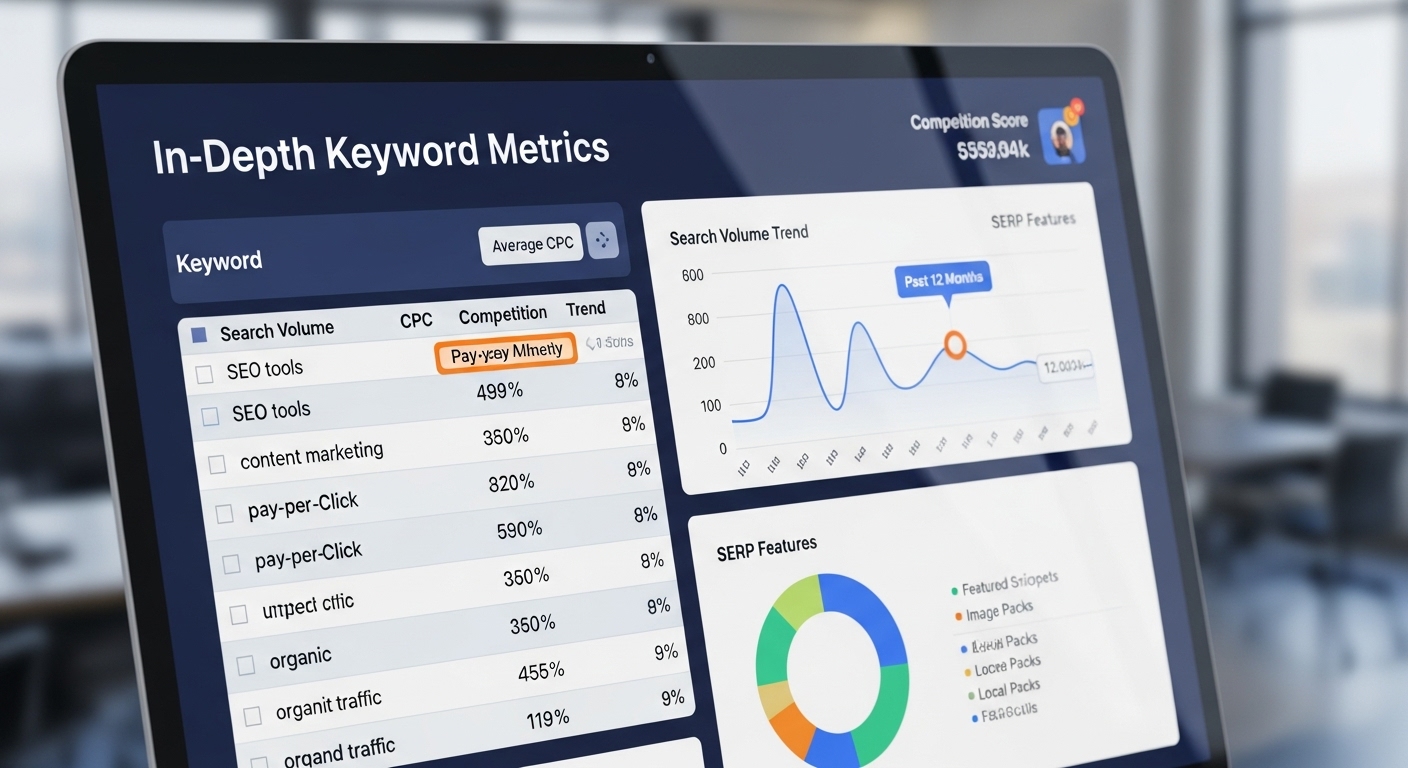
Search Volume – Average monthly searches indicate demand.
-
Keyword Difficulty – Measures how hard it is to rank organically.
-
Click-Through Rate (CTR) Potential – Predicts engagement from search results.
-
Cost Per Click (CPC) – Shows commercial value in paid campaigns.
-
Search Intent – Categorizes keywords as informational, commercial, or transactional.
-
Trend Analysis – Tracks seasonal or emerging search trends for better planning.
These metrics are especially valuable for services offered by ranking.help, such as keyword research services, SEO audit services, and local SEO services.
Why In-Depth Keyword Metrics Matter
Modern SEO is no longer about guessing or targeting high-volume keywords alone. Using in-depth keyword metrics allows your SEO strategy to be data-driven and precise.
Benefits include:
-
Target High-ROI Keywords: Focus on terms with traffic that converts.
-
Avoid Wasted Resources: Skip overly competitive keywords unlikely to rank.
-
Support Content Strategy: Identify topics for blogs, service pages, and FAQs.
-
Measure SEO Performance: Track improvements and adjust strategy over time.
For example, tracking long-tail keywords strategy allows businesses to rank for niche queries, improving organic traffic growth while competing less with major brands.
How to Use In-Depth Keyword Metrics Effectively
1. Start With Comprehensive Keyword Research
Begin by identifying broad keywords relevant to your niche using tools like Google Keyword Planner, SEMrush, or Ahrefs. For ranking.help, seed topics could include:
-
SEO services
-
keyword research services
-
local SEO services
-
on-page SEO optimization
-
content marketing strategy
-
technical SEO audit
Next, expand into long-tail keywords, location-based keywords, and question-based searches to discover untapped opportunities.
2. Evaluate Competition and Keyword Difficulty
Not all keywords are created equal. Analyze competitors’ content and evaluate difficulty scores:
-
Prioritize low-to-medium difficulty keywords for faster wins
-
Identify keywords with strong commercial intent
-
Target queries competitors haven’t fully optimized
This approach enhances visibility for digital marketing services and improves ROI for SEO for small businesses.
3. Understand Search Intent and CTR
Every keyword should be evaluated for intent:
-
Informational: The user wants to learn.
-
Transactional: The user wants to take action.
-
Commercial: The user is comparing options.
Keywords with high CTR potential and transactional or commercial intent often convert better. Incorporate these keywords naturally in service pages, blog content, and FAQs.
4. Integrate Metrics into Content Strategy
Use the keyword metrics to prioritize content creation:
-
Blog posts targeting long-tail queries
-
Service pages focusing on high-value keywords
-
FAQ sections covering user questions
-
Location-based SEO pages for local SEO services
Using topic clusters and semantic keyword relationships strengthens topical authority.
5. Track, Analyze, and Refine
Keyword metrics are dynamic. Regularly monitor:
-
Search volume trends
-
Ranking changes
-
Traffic and conversion rates
-
Competitor movements
This ensures your SEO audit services and content marketing efforts stay relevant and effective.
Common Mistakes to Avoid
-
Chasing high-volume keywords only
-
Ignoring search intent
-
Publishing thin or duplicate content
-
Neglecting semantic keywords
-
Skipping internal linking
Avoiding these mistakes ensures consistent organic traffic growth and improved Google ranking improvement.
FAQs: In-Depth Keyword Metrics
Q1: What are in-depth keyword metrics?
A1: Metrics analyzing a keyword’s search volume, difficulty, CTR, CPC, and search intent to optimize SEO strategy.
Q2: Why are they important for SEO?
A2: They help target high-value, low-competition keywords that drive traffic and conversions.
Q3: How can I track in-depth keyword metrics?
A3: Tools like SEMrush, Ahrefs, and Google Keyword Planner provide insights for analysis.
Q4: Are long-tail keywords part of in-depth metrics?
A4: Yes, long-tail keywords often offer higher conversion potential and lower competition.
Q5: How do these metrics support content strategy?
A5: They guide content creation, internal linking, and building topical authority across your site.